




Canon

Tutorials & Guides
Often when working on a commercial, corporate video, or industrial video, we make a last minute call to add more cameras. Has that ever happened to you? It seems inevitable that a job that started out as a single camera becomes two before the scout, and even three by the time we prep. It can be a struggle to find an operator last minute that owns the same camera already chosen as A cam, or a rental house that has both cameras and lenses available to match both the required look and budget. That is, unless you’re shooting Canon.
Tech News
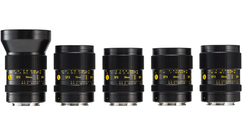
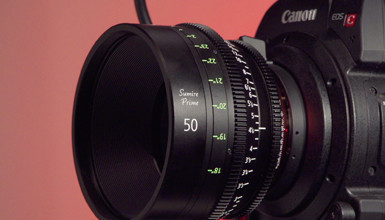
Canon announced their new Sumire Cinema Prime lenses today. This new set of full format PL-mount lenses builds on their popular Cinema Primes, which are exclusively in EF mount.

Tutorials & Guides
In this video, I look at the differences between the two major ways to shoot a script in filmmaking: shooting with one camera at a time, or shooting multiple cameras simultaneously. I take a look at the different factors involved, including how best to balance the advantages and disadvantages of each method in order to get the most from your scenes.

Tutorials & Guides
In this video, I set out to experiment with different ways of moving the camera in order to see how each compare in a single scene. We shot a scene with a dancer in four different ways: on a tripod, on a slider, handheld, and on a gimbal (the MōVI Pro). What I discovered was that the different methods give very different effects and there's a place for them all, as long as you understand the relative strengths and weaknesses of each.

Tutorials & Guides
The Canon CN-E 18-80mm T4.4 Servo Zoom is lightweight and versatile, making it a great choice when you're shooting in ENG mode. In this blog, I go through the steps you'll take in order to set back focus on this lens.

Tutorials & Guides
Shooting talking heads is a fundamental skill of cinematography that's always in demand. Here we'll talk a little about what goes into creating a professional looking interview setup.
Client Profiles
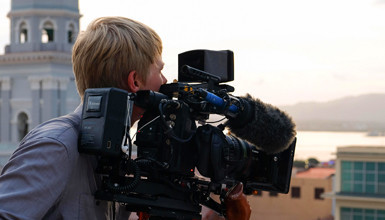
You may be familiar with Matt Porwoll from last year's Behind the Lens blog series, but did you know he's also an Emmy Award-winning cinematographer who used to work in the AbelCine rental department? It's true! Luckily for us, Matt enjoys sharing what he's learned about the technical aspects of his craft. Recently, we had the chance sit down for an in-depth discussion on his current favorite gear.

Tutorials & Guides
In this, the last episoide of my 4K for $10K series, I cover the Canon C300 MK II. I focus on the camera's core features, both hardware and software, and where I see it fitting into Small to No Crew production environments.
Tutorials & Guides
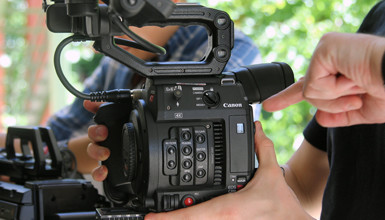
In this episode of my 4K for $10K series, I cover the Canon C200. I focus on the camera's core features, both hardware and software, and where I see it fitting into Small to No Crew production environments.