







Tutorials & Guides
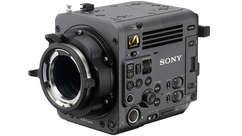
In this third part of my series on the Sony F65 Workflow, I go over how to use Sony's SR Compression format. In the latest firmware revision, the F65 is able to record in the SStP (Simple Studio Profile) video format, also known as the SR Compression format. This is the same format found in the F35 and other HDCAM SR recording cameras. Right now, the F65 can record in the SQ Mode (at 440 Mbps) to the SR Memory cards, with HQ and Lite options available in the future.
Tutorials & Guides
In the fourth part of my Sony F3 S-log series, I explain how to create Look Up Tables (LUTs) to be used in the camera. When shooting in S-Log, the F3 allows you to apply a LUT to an output of the camera, letting the operator visualize how the image will look after post-production correction.
Tutorials & Guides
Last year in our booth at NAB, AbelCine showed a prototype of the new Canon CN-E 14.5-60 T2.6 Cinema Zoom lens. We were very impressed at the time, and in recent private testing, were even more pleased. Now that the release version is shipping, AbelCine's optical technicians have put this new PL-mount zoom through a battery of evaluations, and we are very excited by the results.
Tutorials & Guides
With the Sony F65 and the SR-R1 recorder come a new set of workflow processes. At AbelCine, we are always trying to stay ahead of the curve, even as technologies such as these are evolving. Sony's F65 and the SR-R1 both record to SRMemory cards, which are high-speed memory that enables recording of F65RAW video at up to 120 fps. To work with these cards, Sony has released the SR-PC4 and SRPC-5 transfer stations, which present a unique way of playing back and downloading content.

Tutorials & Guides

Tutorials & Guides
With every new camera, comes many new questions about workflow. The term 'workflow' can be fairly broad, but today I am looking at importing C300 footage into various non-linear editing systems (NLE). The C300 uses the same workflow as the Canon XF series of cameras (which includes the XF305, XF300, XF105 and XF100), because it records in the same format. However, the tools for importing the footage have been updated by Canon. Below, I outline how to ingest footage onto a hard drive, and how to import into Avid Media Composer, Final Cut Pro 7, Premiere 5.5 and Final Cut Pro X. Keep reading for a brief how-to on each process.

Tutorials & Guides
When Arri released the SUP 4.0 firmware for the ALEXA, they also added the ability to create color 'Looks' to load into the camera. These Look files are similar to scene files found in other cameras, but they aren't burned into the Log C recording of the camera. Instead, they can be used in post by converting them to LUTs using Arri's LUT Generator. These looks then travel as metadata with the clips recorded (through the XML file). Look files can be created by saving a still from the camera and loading it into the Arri Look Creator, which can then modify the still and output a look.

Tutorials & Guides
Upon hearing the term Asset Management System most production people think of a tape library or a system to keep track of equipment. In today's world of tapeless acquisition, our master assets are digital, and a comprehensive method to keep track of them is usually referred to as a Digital Asset Management system (DAM). The term Media Asset Management System is also widely used, and for our purposes they are interchangeable.

Tutorials & Guides
When you think of a 35mm sensor camera, what characteristics come to mind? Probably the first is shallow depth of field. It is part of what many consider the "look" of that imager size and a principle defining difference between it and other formats. But while some consider this the chief attribute of the format, others may find it to be a detriment in certain situations. For those shooting documentary, run-and-gun productions, a deeper depth of field may be preferable to maintain focus.